MUSIC ADVOCACY

  • Critical Thinking - Music is not one- dimensional, it involves perceptual skills, cognitive skills as well as motor skills. These skills interact in complex ways that play a role in student intelligence and thinking abilities.

  • Creative Thinking - Music is creative at every step: creation, process interpretation and performance.

  • Collaboration - Music ensembles are groups of collaborators, working together regularly, which require goal setting, problem solving, and project and performance agreement.

  • Communication - Music is the mediator of human relationships and is a direct expression of human emotions

  • Citizenship - Music is an inclusive and engaging service to our schools and communities through public performances.

THE FACTS AND STATS

1. "The Auditory Neuroscience Laboratory at Northwestern University in Evanston, Illinois has led the charge, exploring the long term neurobiological and developmental consequences of music education, particularly as they relate to students coming from disadvantaged socioeconomic conditions.   A recent study conducted by Dr. Nina Kraus, et al., shows that one year of music education programming can have significant effects in ameliorating the language deficits generally referred to as the “signature of poverty.”

2. The College Entrance Examination Board found that students involved in public school music programs scored 107 points higher on the SAT's than students with no participation. - Profiles of SAT and Achievement Test Takers, The College Board, compiled by the Music Educators National Conference (2002) U.S. Department of Education data on more than 25,000 secondary school students found that students who report consistent high levels of involvement in instrumental music over the middle and high school years show "significantly higher levels of mathematics proficiency by grade 12." - U.S. Department of Education NELLS88 Database.
3. Schools with music programs have an estimated 90.2% graduation rate and 93.9% attendance rate compared to schools without music education, which average 72.9% graduation and 84.9% attendance. Schools that have music programs have an attendance rate of 93.3% compared to 84.9% in schools without music programs.
4. Children who study music tend to have larger vocabularies and more advanced reading skills than their peers who do not participate in music lessons.
5, In the past, secondary students who participated in a music group at school reported the lowest lifetime and current use of all substances (tobacco, alcohol, and illicit drugs).
6. Regardless of socioeconomic status or school district, students (3rd graders) who participate in high-quality music programs score higher on reading and spelling tests. 
7. Young children who take music lessons show different brain development and improved memory over the course of a year, compared to children who do not receive musical training.
8. Much like expert technical skills, mastery in arts and humanities is closely correlated to a greater understanding of language components.
9. In an analysis of U.S. Department of Education data on more than 25,000 secondary school students, researchers found that students who report consistent high levels of involvement in instrumental music over the middle and high school years show "significantly higher levels of mathematics proficiency by grade 12." This observation holds true regardless of students' socio-economic status, and differences in those who are involved with instrumental music vs. those who are not is more significant over time. Catterall,
James S., Richard Chapleau, and John Iwanaga. "Involvement in the Arts and Human Development: General Involvement and Intensive Involvement in Music and Theater Arts." Los Angeles, CA: The Imagination Project at UCLA Graduate School of Education and Information Studies, 1999.
10. The arts also contribute to the education of young children by helping them realize the breadth of human experience, see the different ways humans express sentiments and convey meaning, and develop subtle and complex forms of thinking. Although the arts are often thought of as separate subjects, like chemistry or algebra, they really are a collection of skills and thought processes that transcend all areas of human engagement.

ARTICLES

The Benefits of Music Education

By Laura Lewis Brown

How Children Benefit from Music Education in Schools

BYSharon Bryant

20 Important Benefits of Music In Our Schools

Making the Case for Music Education

VIDEO LINKS

Systematic Inequality in Education - Advocating Change through Music:  Peter Douskalis

TEDxSydney - Richard Gill - The Value of Music Education


Why Music Education Belongs in Public Schools

How playing an instrument benefits your brain - Anita Collins

MISCELLANEOUS TEACHING RESOURCES

TEACHERS PAY TEACHERS


TpT is the go-to place for educators to find the resources, knowledge, and inspiration they need to teach at their best. We offer more than 3 million free and paid resources, created by educators who understand what works in the classroom. Our marketplace is growing every day to meet the evolving needs of the PreK-12 classroom. When educators get the resources and support they need, they're best equipped to inspire our next generation of learners.

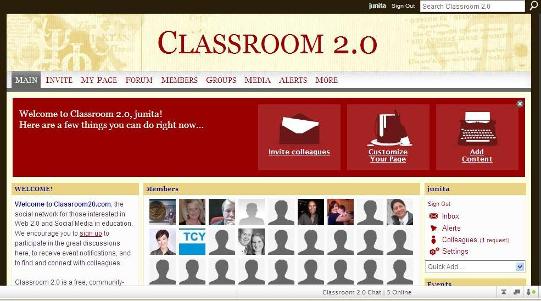
CLASSROOM 2.0


Classroom 2.0 is a free, community-supported network. We especially hope that those who are "beginners" will find this a supportive comfortable place to start being part of the digital dialog.

KENTUCKY DEPARTMENT OF EDUCATION

KENTUCKY EDUCATION TELEVISION


This collection provides K-12 teachers with high-quality teaching resources that bring the world of music into the classroom. You’ll find lesson plans, idea cards, glossaries, and many special features. The lesson plans are based on video segments taken from KET programs; visit the Video section for information on how to record these programs when they are broadcast and how to request a rebroadcast.

EASTERN KENTUCKY UNIVERSITY CENTER FOR THE ARTS


Each year the EKU Center presents discounted daytime performances geared specifically for students and their teachers. Student matinee performances are designed to enhance classroom learning, expand cultural awareness, and inspire young people through exposure to performing arts, while helping to meet national and state education standards. Supporting curriculum-related materials are available for download on the individual event pages below.

TEACHING TOLERANCE

Our mission is to help teachers and schools educate children and youth to be active participants in a diverse democracy.Teaching Tolerance provides free resources to educators—teachers, administrators, counselors and other practitioners—who work with children from kindergarten through high school. Educators use our materials to supplement the curriculum, to inform their practices, and to create civil and inclusive school communities where children are respected, valued and welcome participants.
Links

Home


Contact US


MUSICINELEMENTARY@GMAIL.COM

SIGN UP For OUR NEWSLETTER

© Copyright Music Integration in Elementary Classrooms